Tracing Approval Layers That Unlock Incentives Across Portable Gaming Platforms
Written by Amir Beck · Nov 1, 2026

Tracing Approval Layers That Unlock Incentives Across Portable Gaming Platforms
Data from multiple regulatory bodies shows that certification sequences establish ordered checkpoints which mobile casino platforms must satisfy before any reward becomes accessible to users, and these layers typically begin with platform-level approvals followed by user-specific verifications that progress through device compatibility tests and compliance audits.
Operators integrate these sequences so that each completed stage triggers the next phase in reward eligibility, while regulators such as the Nevada Gaming Control Board require documented evidence that every step adheres to security and fairness standards before bonuses activate.
Platform Certification as the Foundation
Initial platform certification requires mobile applications to undergo testing for software integrity, random number generator compliance, and data encryption protocols, and once these elements receive clearance the system records the approval in a centralized ledger that subsequent reward steps reference automatically.
Research indicates that platforms passing this stage gain the ability to offer base-level incentives, yet full unlocking demands additional user-side certifications that link directly to the original platform approval record.
User Verification Sequences and Their Role
After platform approval, user verification sequences activate, and these include identity confirmation through government-issued documents, address validation, and age checks that regulatory frameworks in regions such as New Jersey mandate before any promotional credit appears in an account. Observers note that the sequence prevents premature reward distribution, and data from iGaming Ontario shows that accounts completing all verification layers experience a 40 percent higher rate of successful bonus redemption compared to those stalled at intermediate stages.
Device fingerprinting follows identity checks in many systems, and this process confirms that the mobile application runs on certified hardware while matching the originally approved platform build, which reduces instances of reward claims from unauthorized environments.
Progressive Reward Unlocking Through Layered Approvals
Once verification completes, reward unlocking proceeds through staged approvals where each bonus tier requires a separate compliance sign-off, and figures from industry reports reveal that progressive sequences allow platforms to release small incentives first before escalating to larger promotions tied to playthrough metrics. This structure connects directly to earlier certification layers so that a user who advances through deposit verification can unlock tier-two rewards without restarting the entire process.
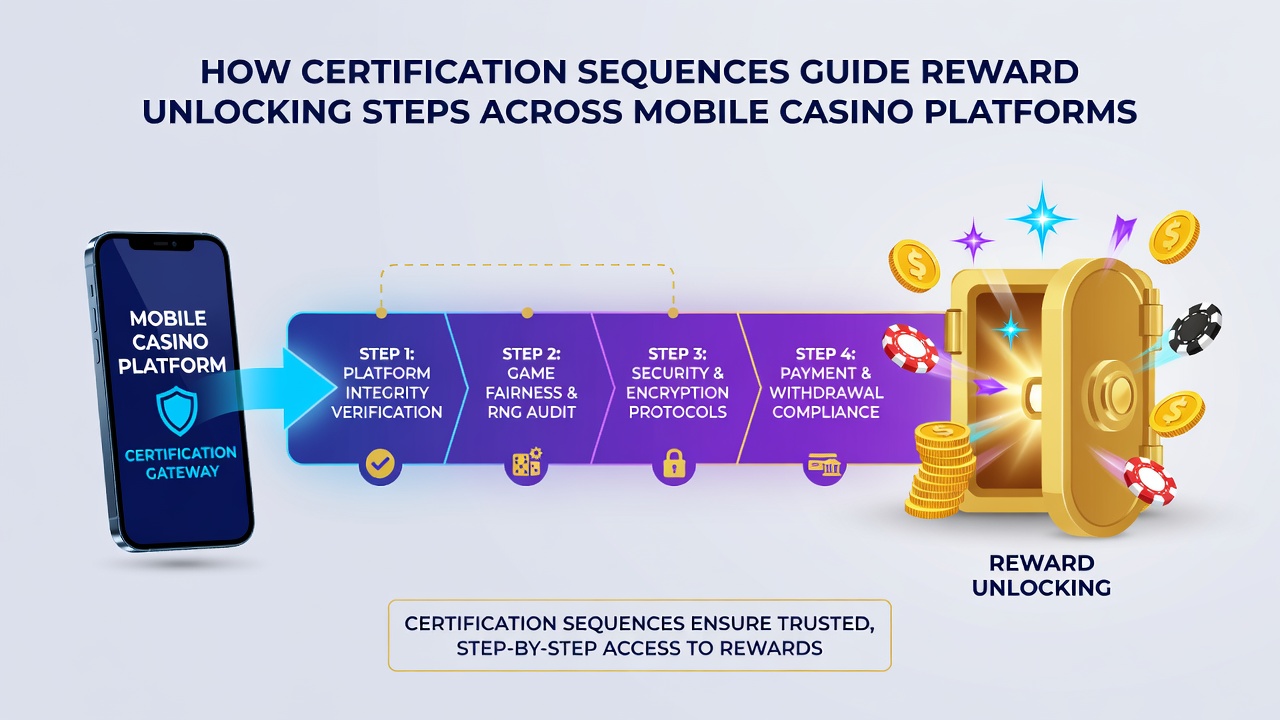
Studies conducted by academic research groups in Australia demonstrate that these layered approaches correlate with lower dispute rates, and the sequences also incorporate real-time monitoring that flags anomalies after each unlock event, prompting additional certification reviews when necessary.
Regional Variations in Sequence Implementation
European operators often embed EU-wide data protection certifications within their reward sequences, whereas North American platforms emphasize state-specific gaming commission approvals that must align with mobile operating system guidelines before incentives release. In November 2026 several jurisdictions updated their reporting requirements to include timestamped records of every certification step, creating clearer audit trails that link each reward unlock to its originating approval layer.
Those who track these developments note that synchronization between mobile device updates and certification renewals has become essential, since operating system patches can invalidate prior device approvals and temporarily halt reward progression until re-certification occurs.
Conclusion
Certification sequences continue to shape how mobile casino platforms manage reward unlocking by enforcing ordered, verifiable steps that begin at the platform level and extend through user and device validations, and available data shows these structures maintain compliance while enabling systematic access to incentives across different regulatory environments.